It’s a little late for this title to be applicable because the trip was 2 months ago, but I wrote the first post related to it then with the intent to follow up with a few more. So here’s (finally) the second one. While in St. Augustine (Florida), a can’t-miss attraction is Castillo De San Marcos National Monument.
The Castillo is the oldest masonry fort in the U.S, in the oldest continuously inhabited city (of European origin) in the U.S. The fort is a classic star shape as shown in the Google Earth photo below.
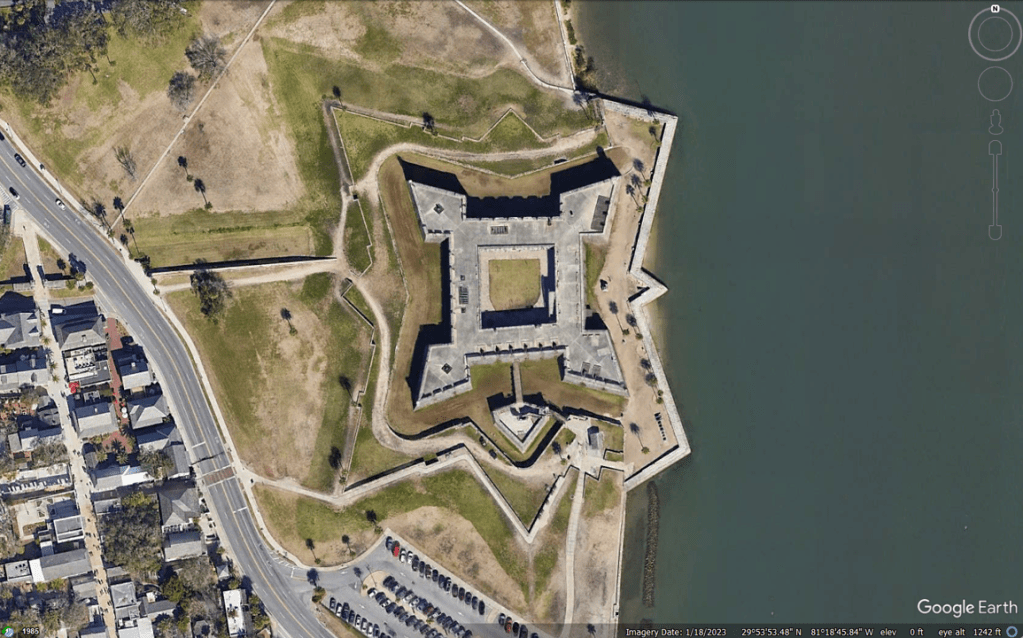
I’m not going to tell much of the history here but rather just show a few pictures. But, in brief, the fort was completed in 1695 by the Spanish. It passed into British hands in 1763 and was renamed Fort St. Mark. It was briefly returned to Spain in 1783 but came under U.S. control in 1825 and was renamed Fort Marion. It became a National Monument in 1924.
The Ravelin is the first structure you walk across as you enter the fort. It was a building that shielded the front gate/entrance from bombardment and attack. It is connected to the fort by a drawbridge.
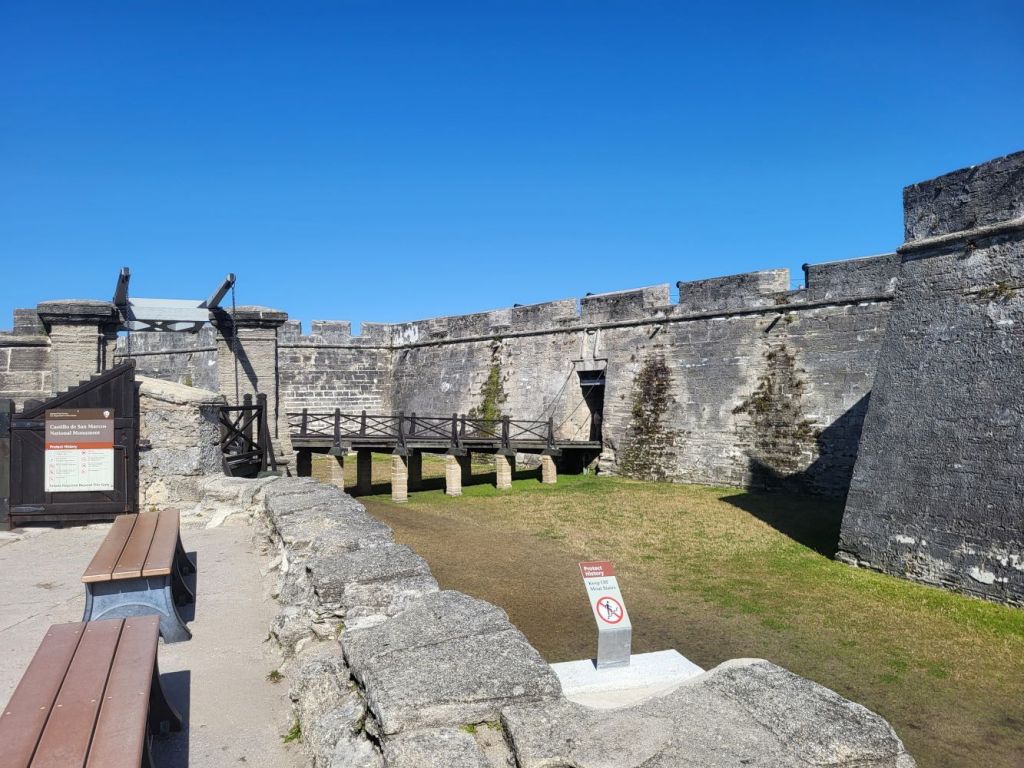
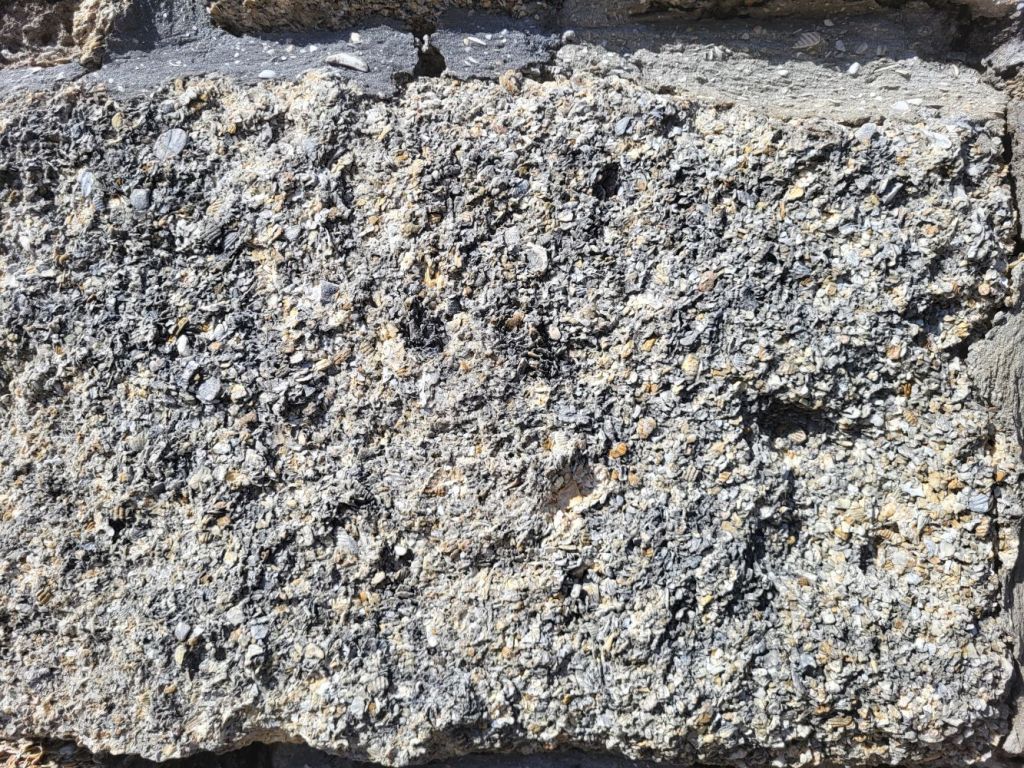
Both the Ravelin and the fort itself are constructed from blocks of Coquina limestone. This is a sedimentary rock composed of a bunch of compressed shells, illustrated in the photo below. It turns out that this rock is very good for forts because it simply absorbs the impact of cannonballs and doesn’t come apart.
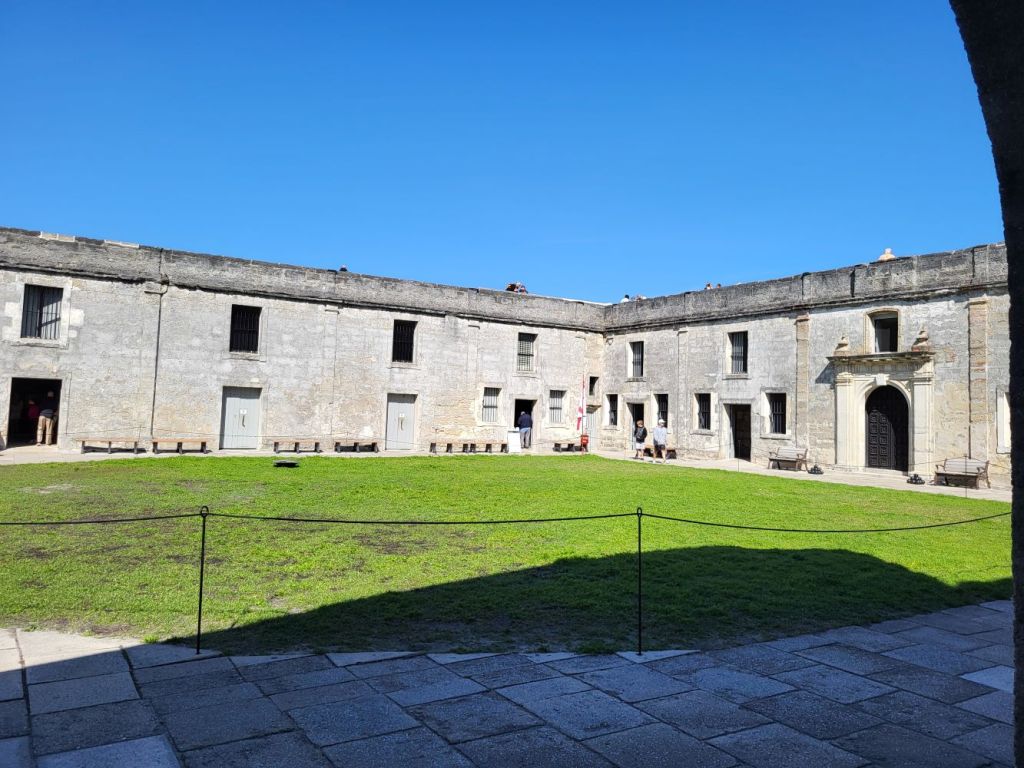
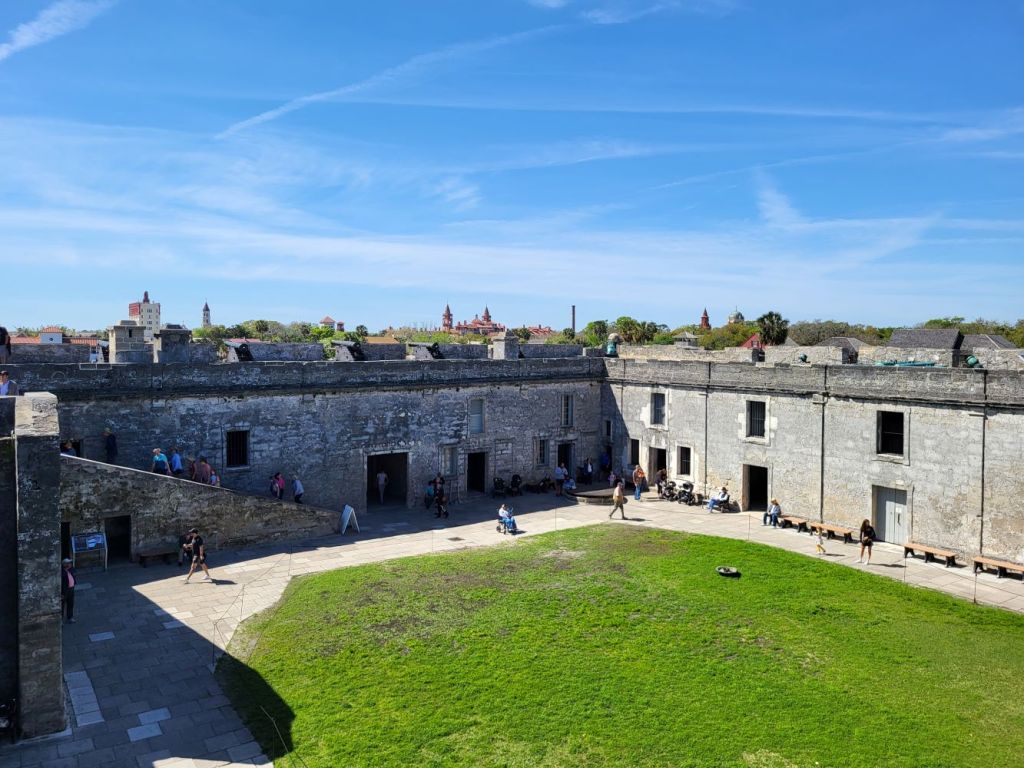
The fourteen-foot thick walls enclose a square courtyard with various rooms opening into it.
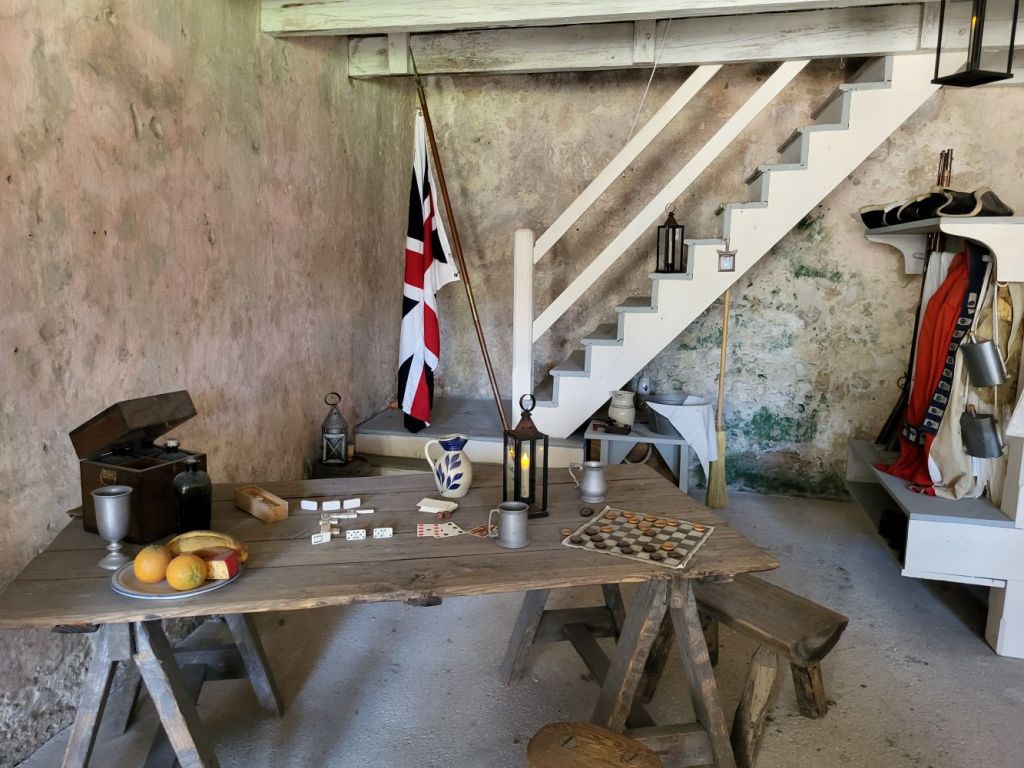
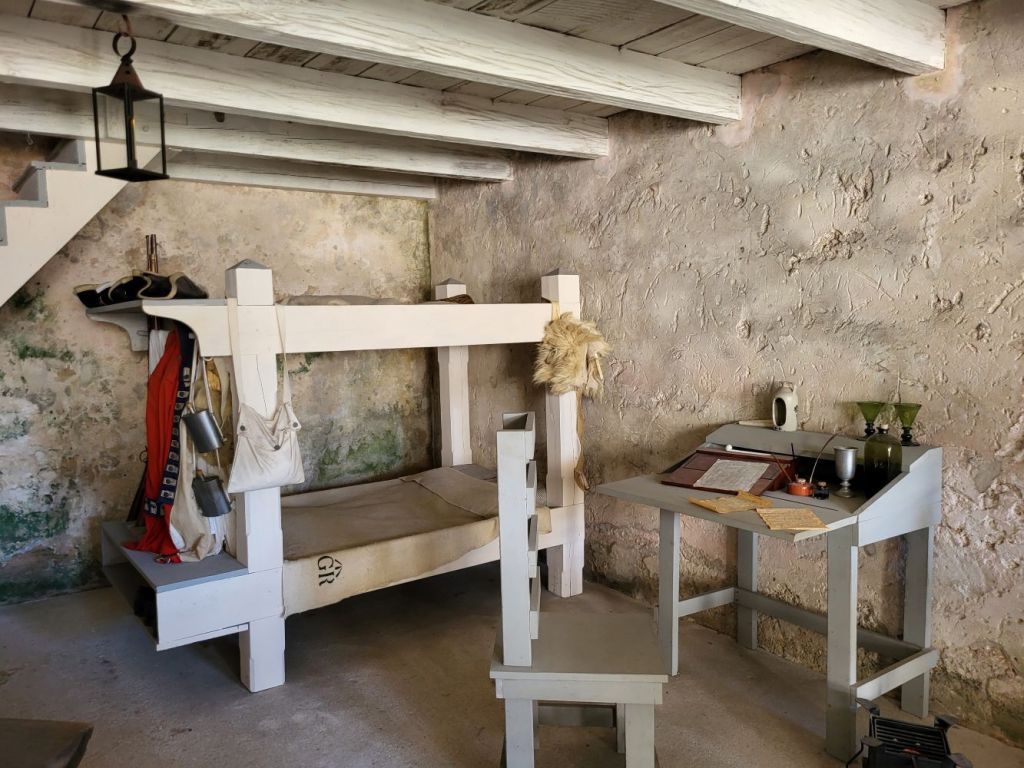
Some of the rooms are furnished and equipped to illustrate how they might have been during the various stages of the fort’s history (over the past 450 years). The 1760s-era British quarters are shown below.
Some of the rooms have displays of artifacts from the various eras in the fort’s history. Two examples are shown below – a cannon that exploded during a battle (killing 3 soldiers), and the Spanish coat of arms that used to be over the fort entrance.


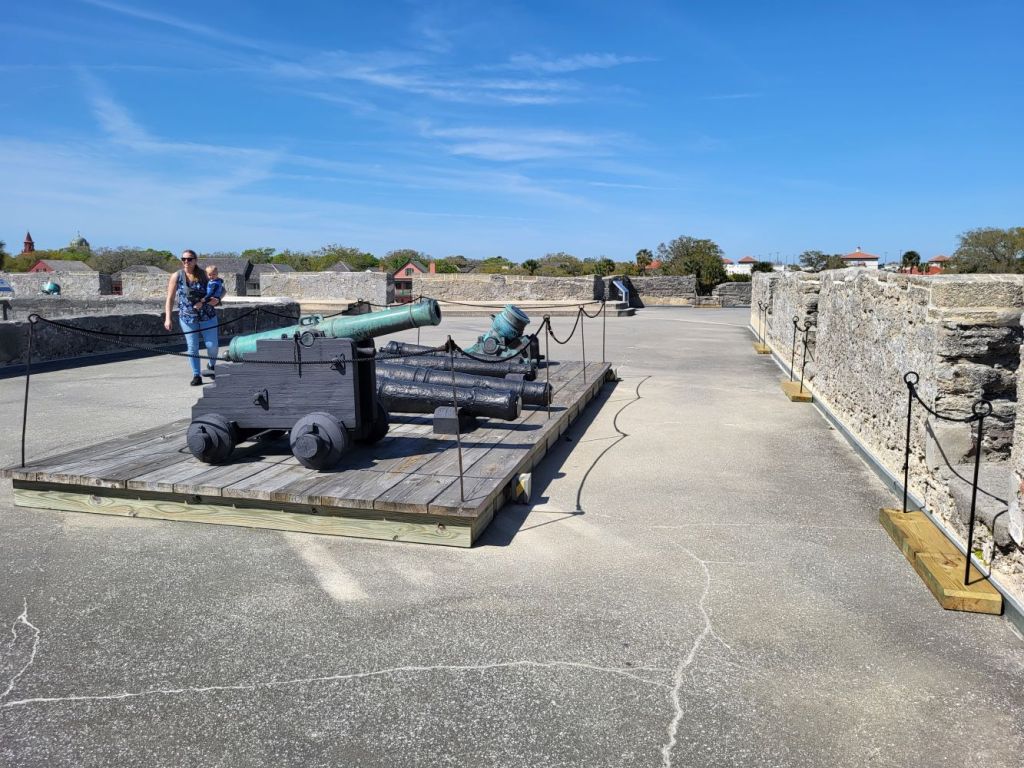
A stairway leads from the courtyard up to the terreplein, or rampart, where there is a nice display of cannons. By the way, that’s my wife Darlene, sitting in the wheelchair waiting for me to come back down!
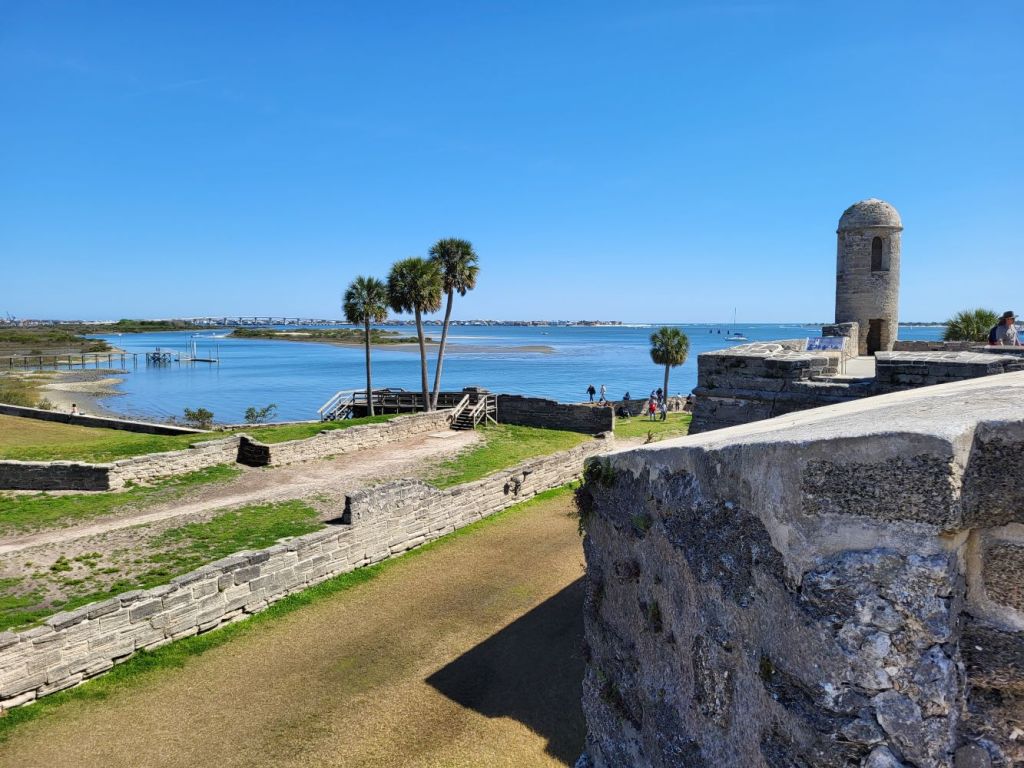
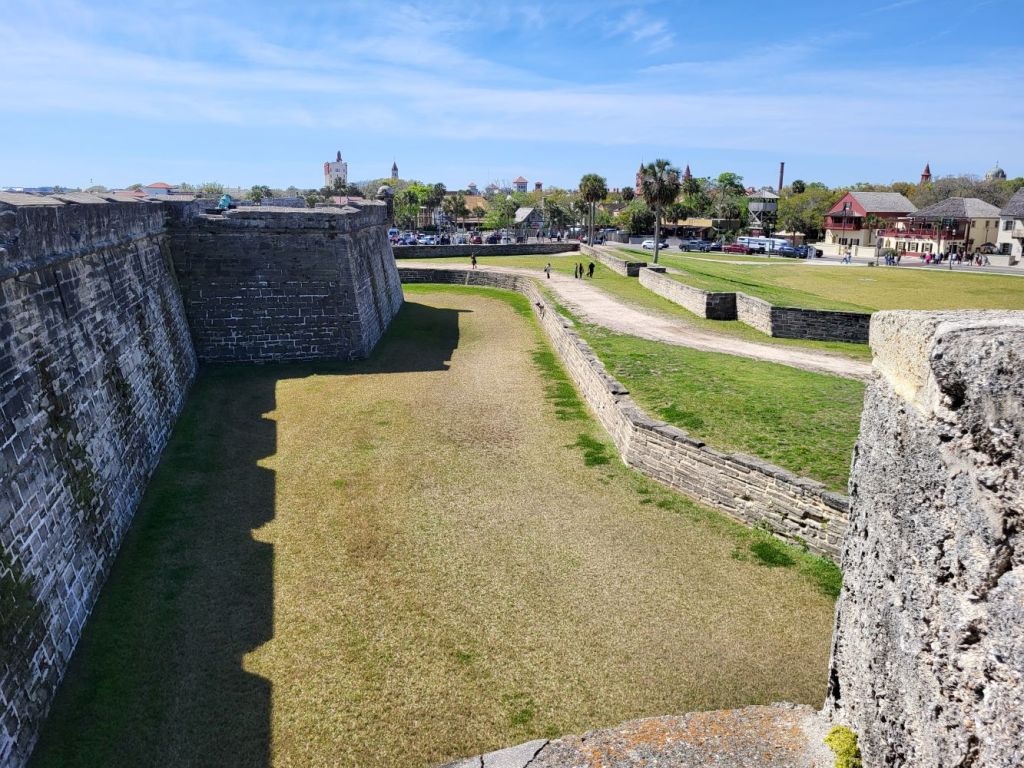
Looking over the wall from the terreplein you can see the dry moat that surrounds the fort and provides protection for soldiers as they move around the outside of the fort. It also serves as protection from attack.
As I said, the fort has a nice collection of cannons, along with a good map and description of each individual piece, available on the website linked above.
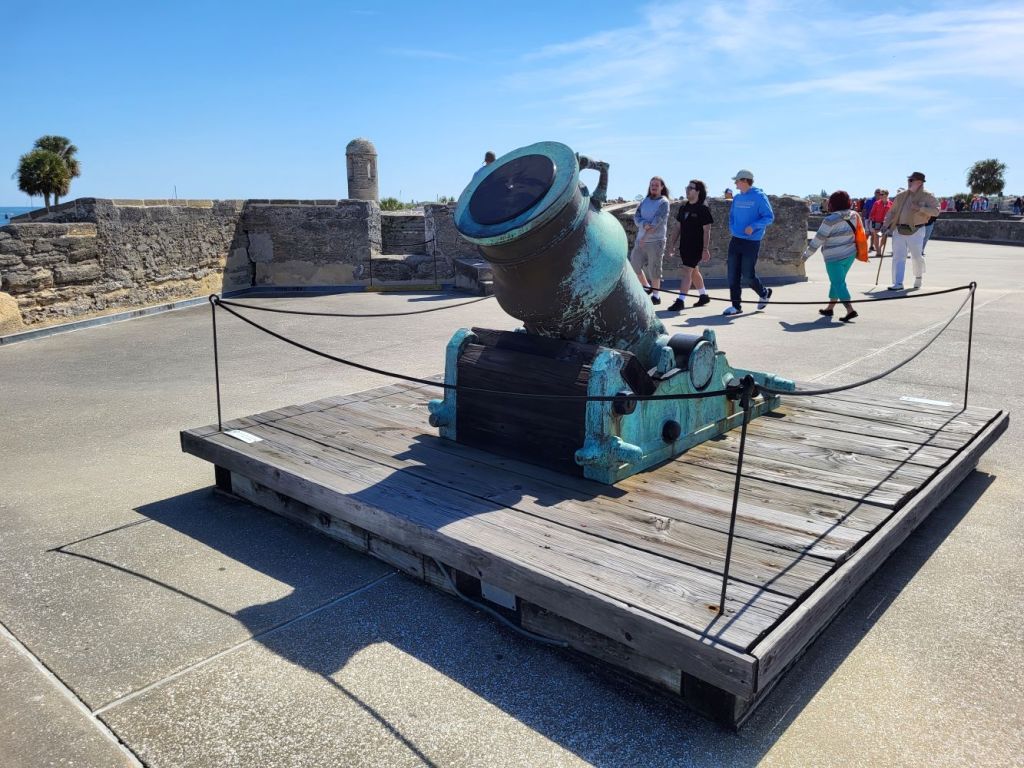
There are regular cannon-firing demonstrations at the fort performed by people in period costuming.

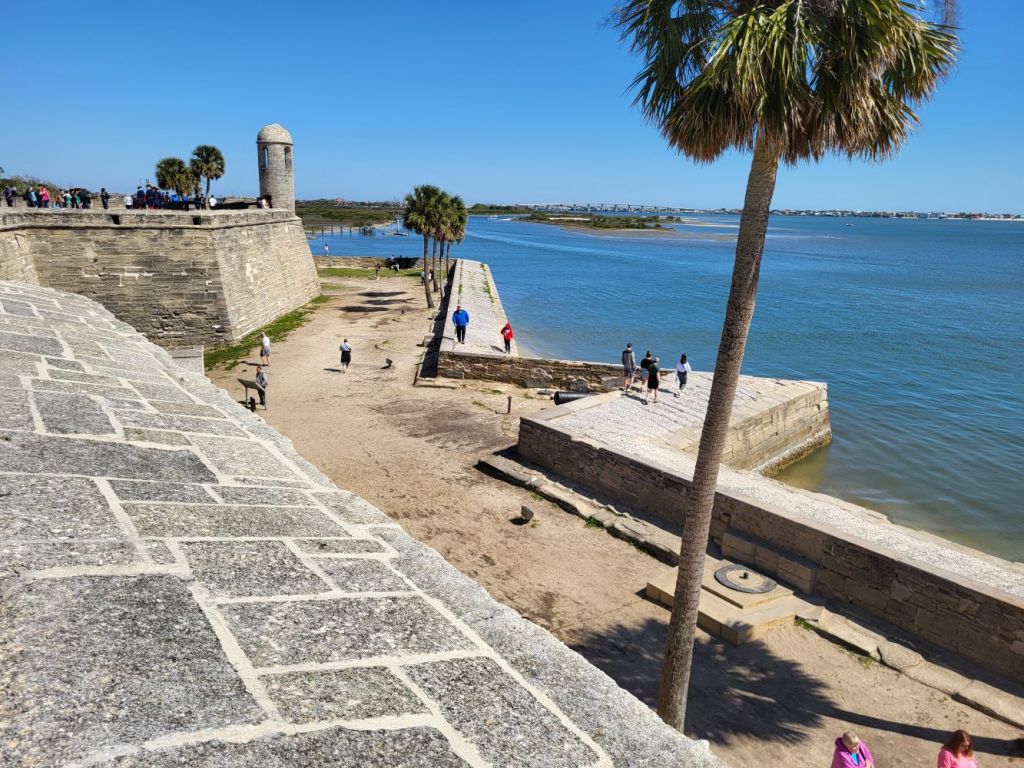
The view of the harbor is nice as well.
We also walked around the historic downtown district of St. Augustine, did a driving tour along the coastal highway, and went to the St. Augustine lighthouse. I might (but no promises) do another blog about some of those later.
 The Watchmaker's Pulse