As I mentioned in Part 1, the Genesis account of creation had a specific purpose for the original readers/hearers – the nation of Israel coming out of captivity in Egypt. They were to recognize that God is responsible for ALL of creation and that their place in it has a purpose.
A lot has been written, especially in modern times, about the age of the Earth, universe, humans, etc. The original intent of the creation account was NOT to establish a time frame, other than to establish the concept of a work week. I don’t believe that the Israelites heard the story and walked away thinking, “Oh, the earth is a lot younger than I thought!” That’s not the point of the story. It’s entirely possible that they thought the earth was eternal, or hadn’t even given it much thought. But now God shows up as says, “Yep. I’m responsible for all this.” – No that’s not a direct quote!
Over the centuries, as we have collected more data about the history of the earth, we can see that a lot has happened that is not addressed in the creation account of Genesis. But I reiterate, it was never intended for that. It is our interpretation of Genesis that imposes date specificity to it. Now please hear me out. I do believe in the inerrancy of God’s word. The way I interpret that statement, though, is that God said, through his chosen inspired writers, exactly what He intended to say and how He intended to say it.
A principle of dual revelation, though, is that the same author of Scripture (God) is also the author of His creation. The Bible tells us that His creation tells us about Him (Psalm 19; Psalm 104; Job 38-41; Romans 1). It reveals Him – as does Scripture. They do so in different ways, and they tell different, but compatible, stories. I believe that if the two seem to disagree, then we have the responsibility to do the work necessary to understand how our interpretations are leading to the apparent disagreement. I believe that there is no true disagreement between the book of Scripture and the book of Nature because they both have the same Author.
Young-earth creationists insist that the earth is only about 6,000 years old because the Bible says so.
It doesn’t say that… and more importantly, it doesn’t intend to say that. I’m still going to address the days of Creation in a future blog post, but I want to take the remainder of this post to mention just a few observations that argue against a young (6,000 year) age of the Earth. I don’t even need to argue here about millions of years difference. I’ll just point out some discrepancies on the order of a few thousand years.
- Ice Cores – The polar ice sheets have continuous records of yearly snow accumulation and melting which produce layers similar in appearance to annual tree rings. These cores, just as tree rings, can be correlated with one another from site to site using chemical analysis of tell-tale markers such as ash from volcanic eruptions. The ice cores produce a record of earth climate history that goes back at least 800,000 years.
- Tree Rings – I just referenced tree rings. Like ice cores, they represent annual (yearly) events in the life of a tree, specifically the more rapid growth of spring/summer and the slower almost dormancy of fall/winter. An individual tree won’t span more than perhaps a few hundred years, but collectively tree rings can be matched across a region to provide a history of yearly growth. To date, tree rings can be traced back almost 14,000 years.
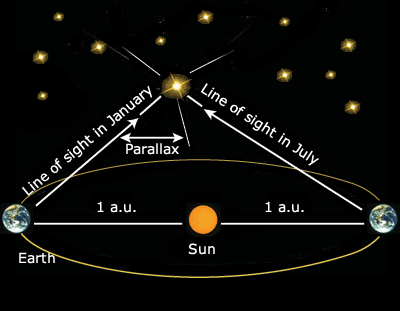
- Stellar parallax – As the earth circles the sun, we can see nearby stars changing their position as seen against the backdrop of further stars. This apparent change in position is called parallax. Basic trigonometry can be used to determine the distance to the star. This method only works well to about a distance of about 1,500 light years (the distance light travels in 1,500 years). However, the furthest direct measurement to date for a star is about 35,000 light-years away. Now star and galaxy distances are measured through other indirect methods out to about 14 billion light-years, but I mention this parallax method because it is a direct means of distance measurement.
- Varves – Varves operate like tree rings and ice cores. They are annual layers of sediment found in lakes deposited during seasonal fluctuations in runoff into the lake. It is not unusual to find these covering several hundred years of time. There is one study reported in Japan that has a varve record spanning 60,000 years.
I have only listed these four dating methods because they are direct measurements of the passage of time. There are many others that provide inferred time data, including radiometric dating, geomagnetic dating, and the relative brightness of stars (e.g. stars are dimmer as seen from farther away). All of these methods together provide an age of the universe of about 13.7 billion years, and the earth with an age of 4.5 billion years.
These ages do not, in my opinion, cast any doubt on God as the Creator and Sustainer of all things but they do argue against a 6,000 year (or so) age of the Earth and time since creation. The creation account – that states that God created in 6 days and then rested – can match just fine with the record of nature, and I’ll begin exploring that next time.
 The Watchmaker's Pulse
One thought on “Days of Creation (Part 2)”