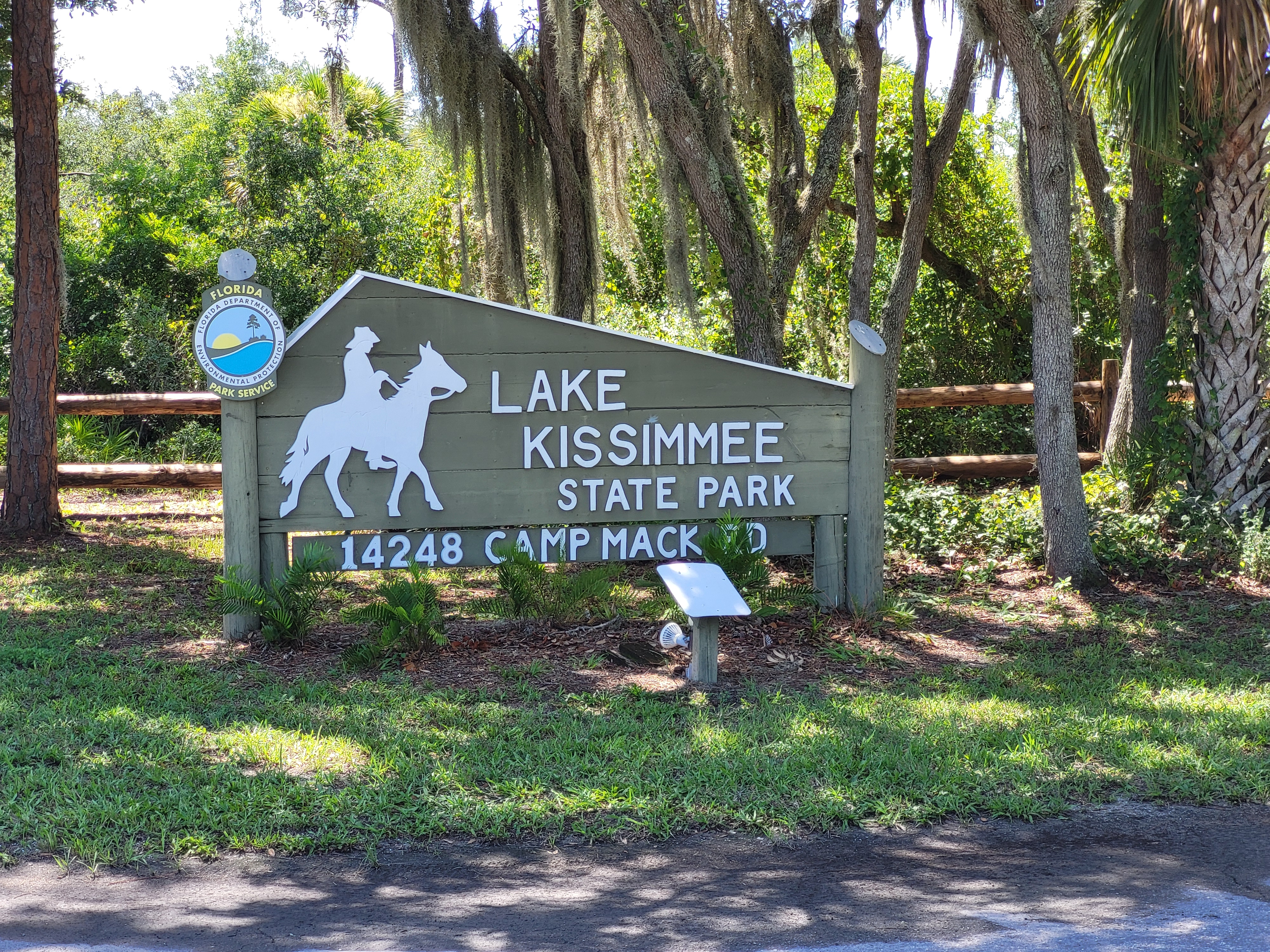
For this week’s blog – my “in-between the Life of Paul” week – I’d like to tell you a little about Lake Kissimmee State Park. Lake Kissimmee is the third largest lake in Florida. The lake itself lies in Osceola County, but the state park that bears its name is in adjacent Polk County. The only direct lake access is via a dirt road that goes through the Youth Camp.
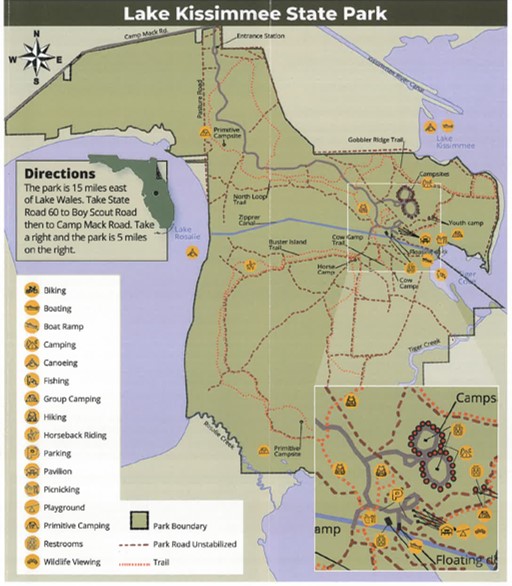
My primary reason for visiting the park was to see the circa 1876 Cow Camp that they have constructed and use for interpretive programming. The Cow Camp is primarily used during the fall, winter, and spring, as summer’s are quite hot in Florida and summer is considered the off-season for this state park. When I arrived, though, the person at the entry point informed me that the rangers who do the Cow Camp programming were present in the park today and he radioed them to meet me at the Camp Store.

The Camp Store is known as the Cracker Shack. The two rangers – Pete and Quin – met me there and took me for a ride in their all-terrain-vehicle to the site of the Cow Camp. I have written previously a little about the cattle industry in Florida and the Cow Camp that we have at the Osceola History Pioneer Village.
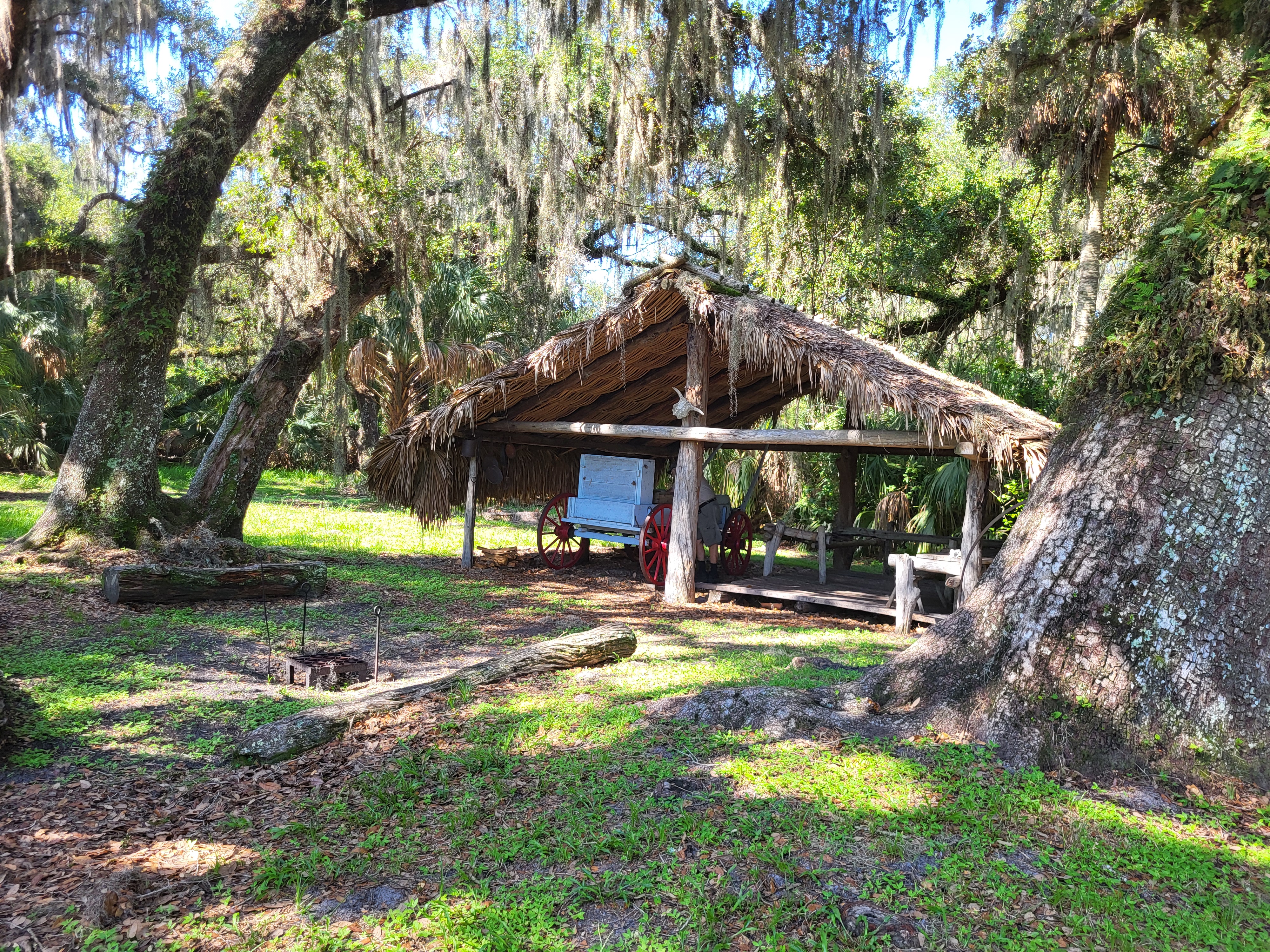
The Cow Camp at Lake Kissimmee State Park is a typical, representative structure of a cow camp. They were built throughout the swamps by cowmen who would set out to hunt for their open-range cattle each year to drive to market. The cow camps were built about a day’s ride/drive apart along the swamp route they would travel. The structure provided a place to spend the night, sleeping, cooking, mending, and entertaining themselves.

This camp has a firepit in front with spits and a grate to hold pots and pans over the fire. The left side has a place to store a camp wagon filled with supplies, tools, and utensils.
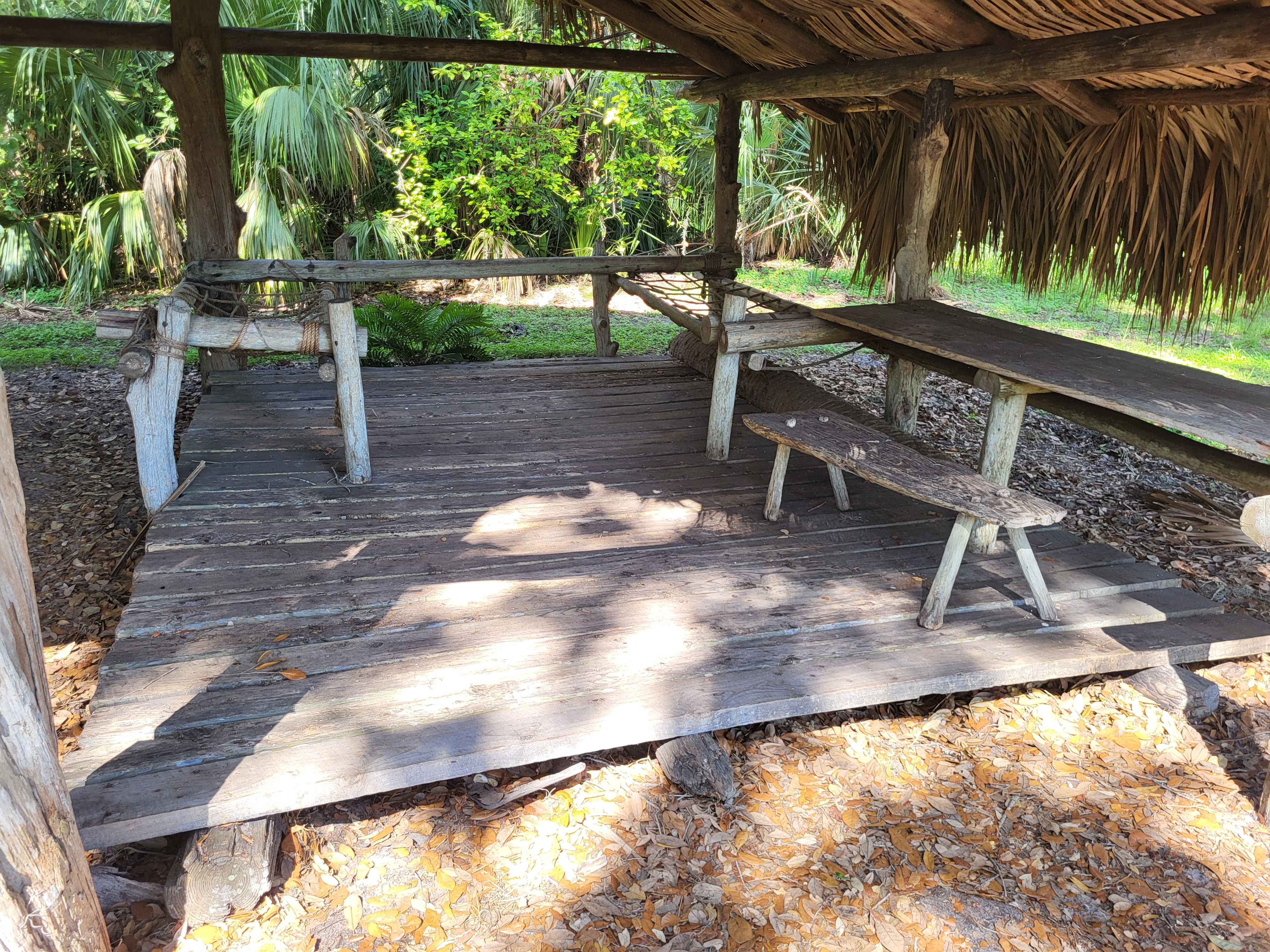
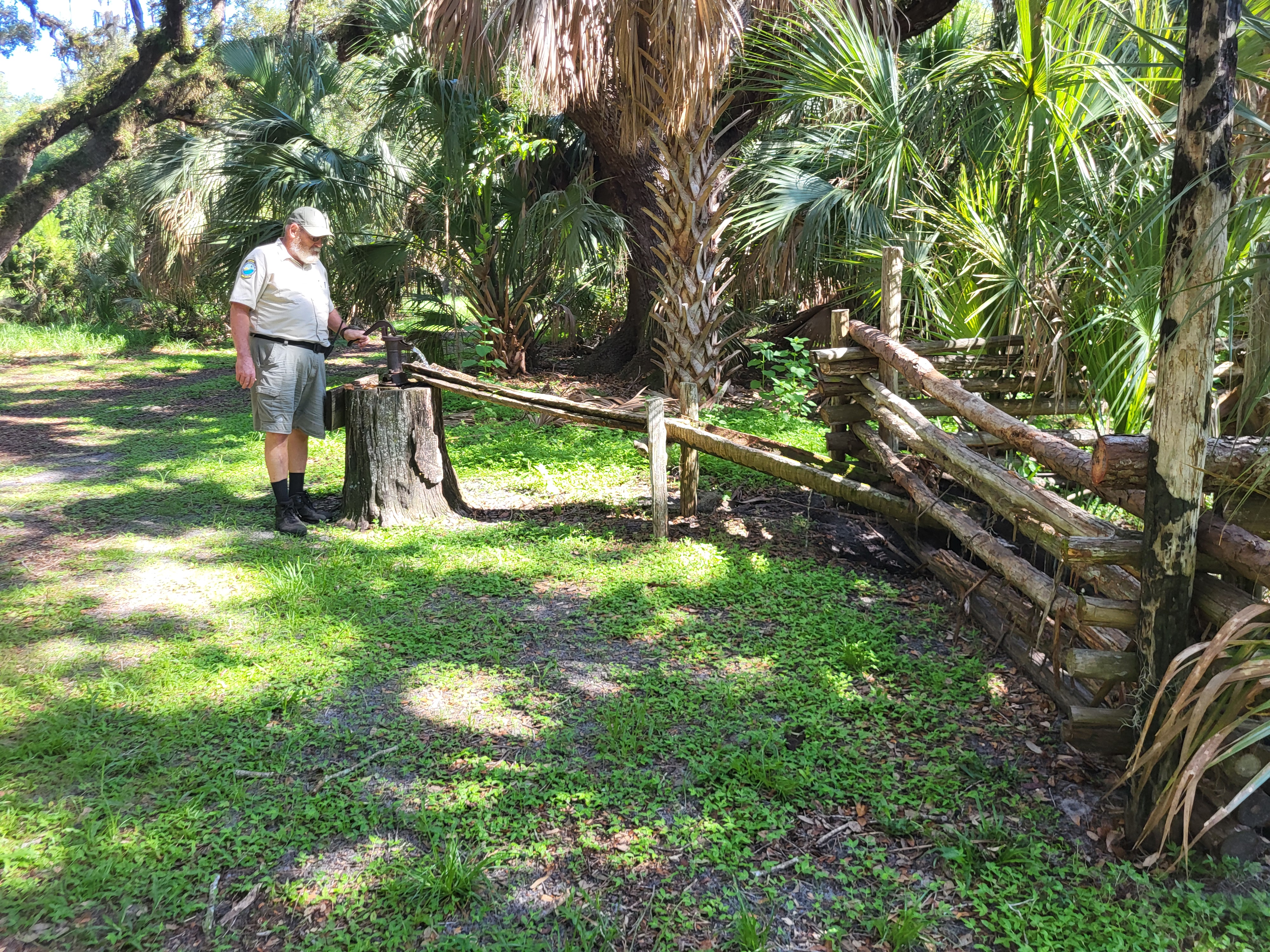
This camp also had a slightly elevated floor with a couple of rope cots and a table and bench. It also featured a corral to hold the cattle and/or horses overnight, and this one has a hand water pump with a sloping trough leading to a watering trough.
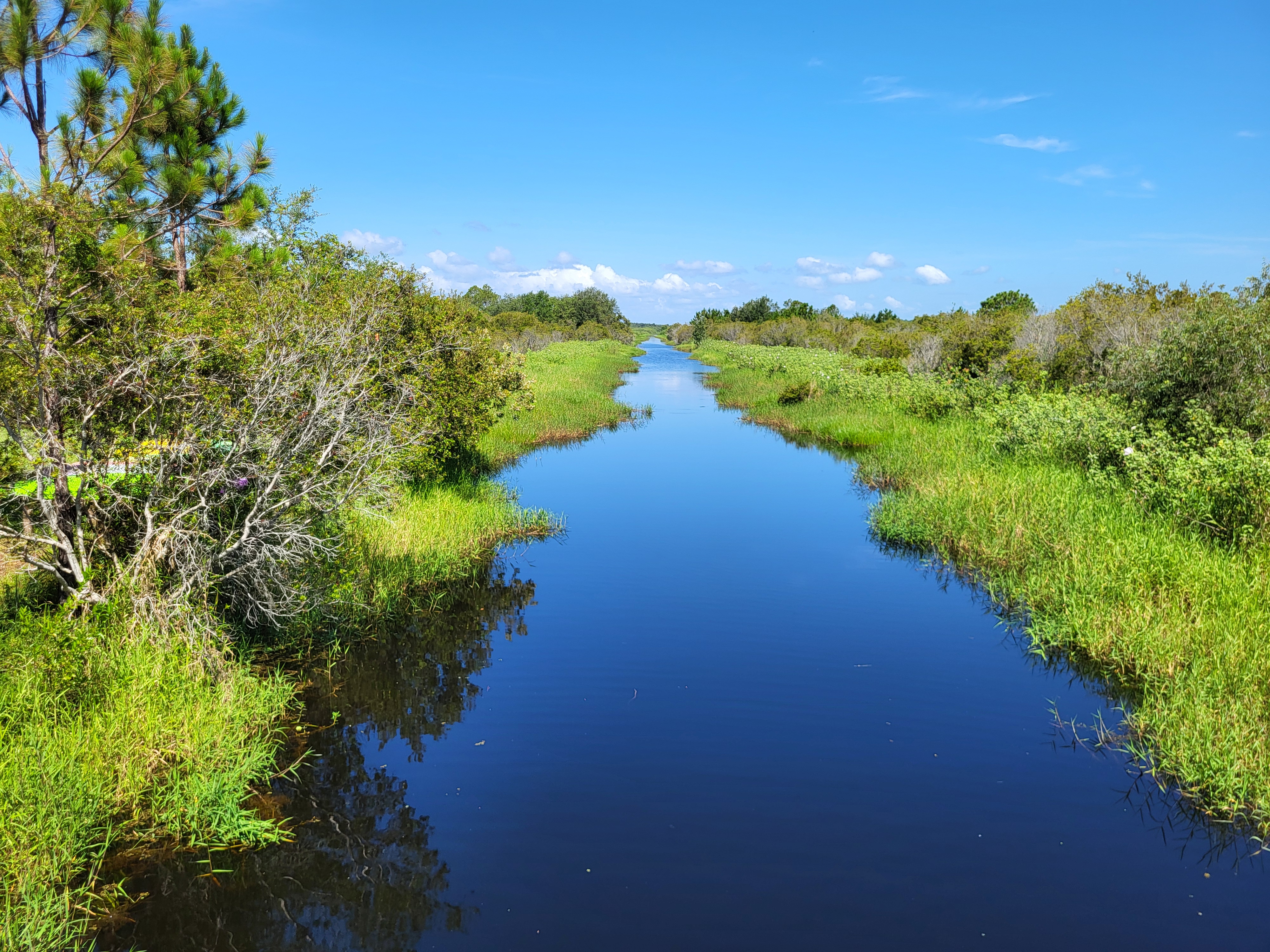
The park is a popular site for boat recreation. A canal connecting Lake Kissimmee and Lake Rosalie is a popular canoe and kayak trail.
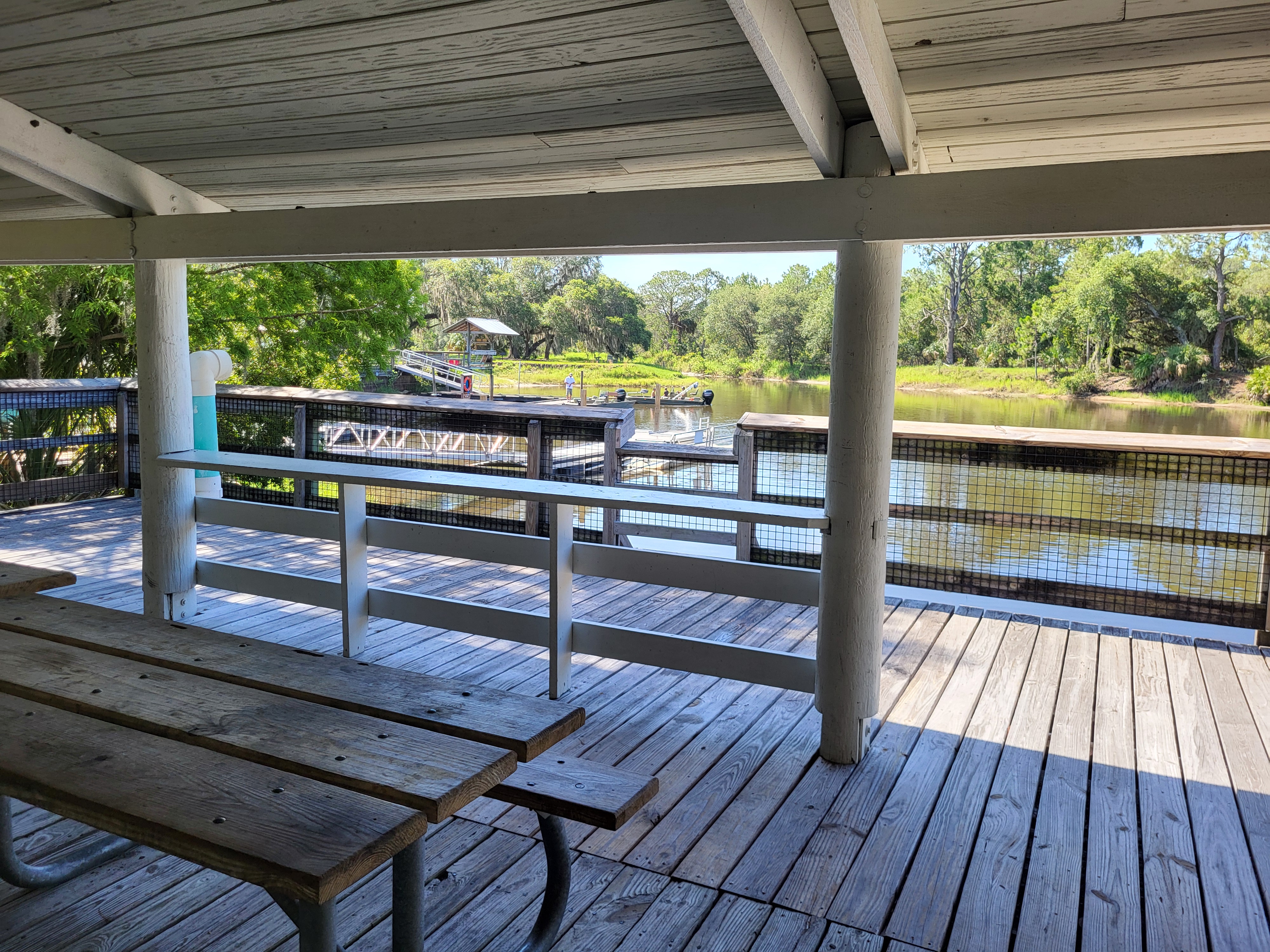
From the viewing deck behind the “Cracker Shack” you can watch as boats are backed into the canal and loaded from the docks. There were plenty of fish topping and jumping out of the water while I was there!
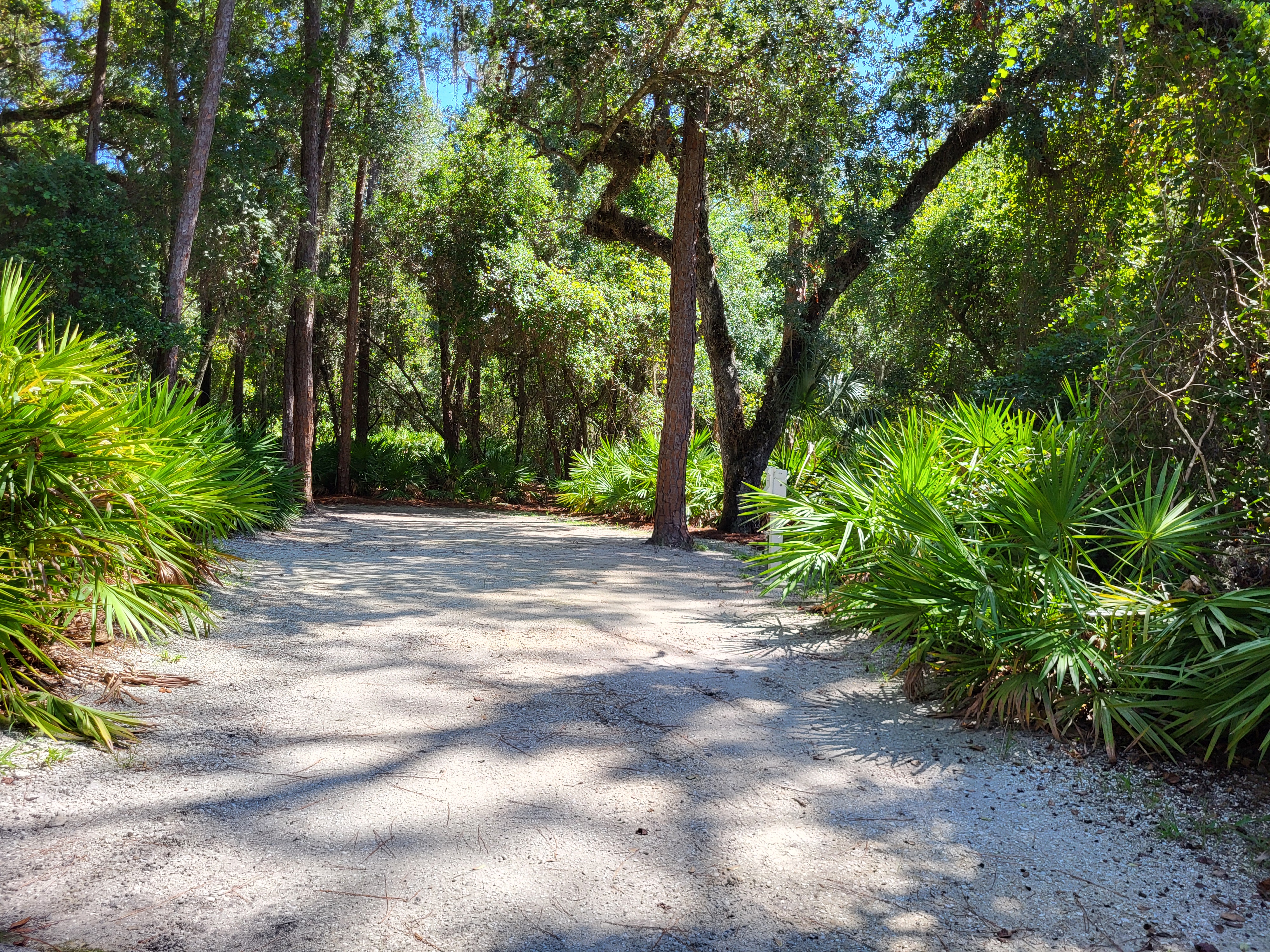
The campground has 60 sites with electricity and water, and there is a dump-station just outside the entrance to the campground. The oak trees offer plenty of shade for the sites and the sites are plenty big for a wide variety of camping setups. The campground also offers several “glamping” tents called Pioneer Tents. These feature (according to the Park’s website):
- A canvas wall tent with rugs.
- One queen bed with linens.
- End tables with lamps.
- Chandeliers.
- Interior and exterior seating areas.
- Additional plugs for charging your devices.
- Fire pit.
- Exterior lighting.
- K-Cup coffee maker.
- Heating/cooling unit.
As I was driving on the park road I encountered a gopher tortoise making its way across the road. I shot this photo as I pulled up next to it!

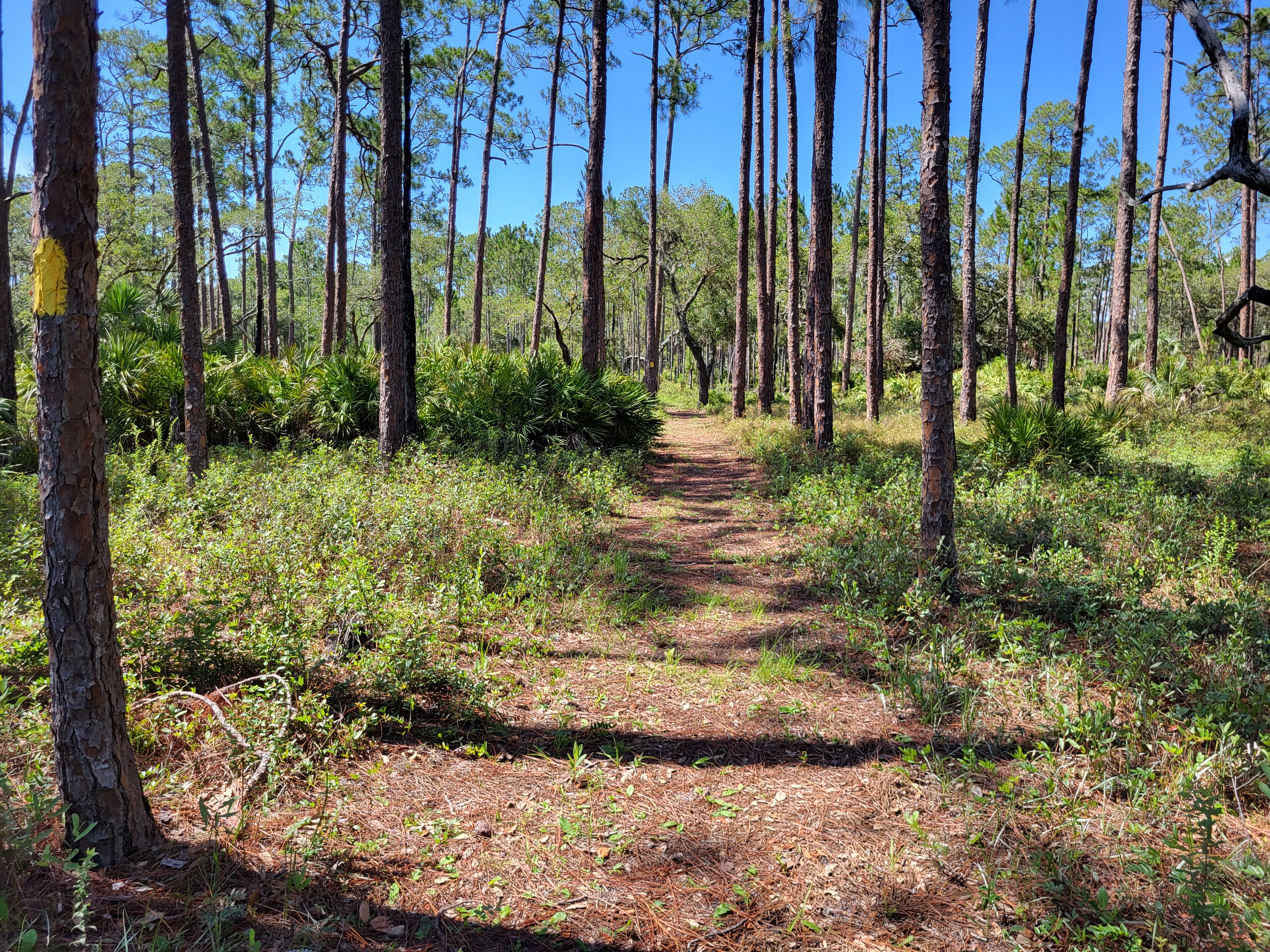
There are thirteen miles of hiking trails through pine flatlands, scrub, and marsh.
I encountered this whimsical art installation at one point where a trail intersected with the roadway.

I was only able to spend a few hours in the park, but it looks like a wonderful natural habitat in which one could happily spend several days exploring and communing with nature!
 The Watchmaker's Pulse