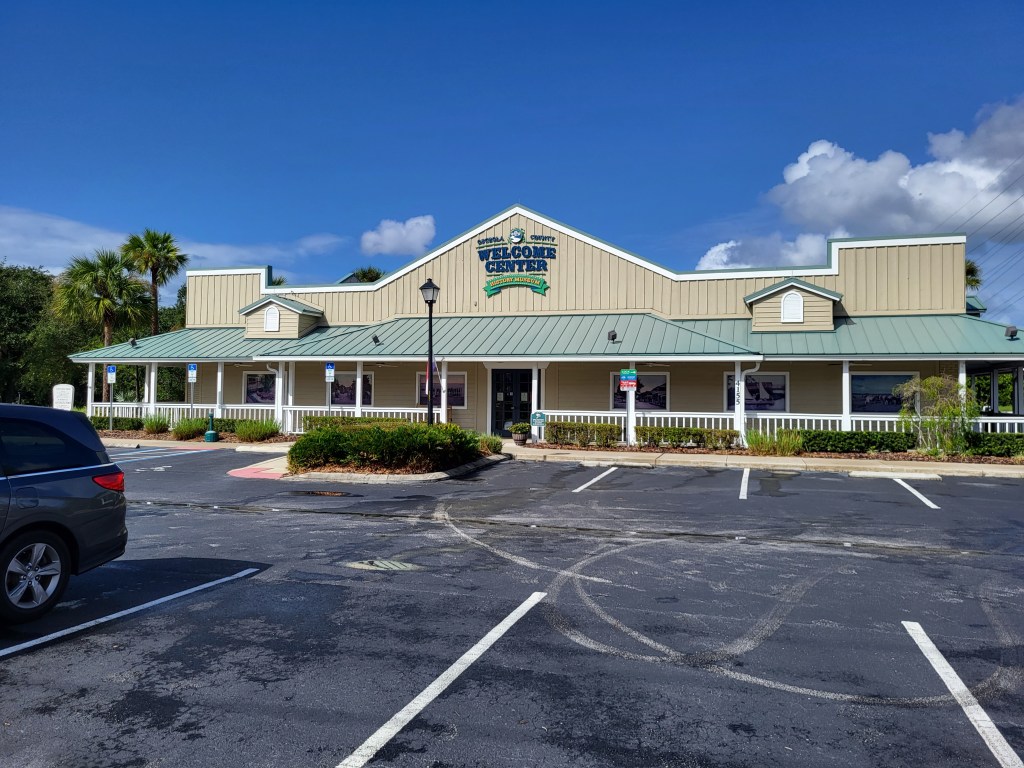
The entity that I currently work for is called Osceola History, which is short for the Osceola County Historical Society. It operates three facilities: a Welcome Center & History Museum, a Pioneer Village, and a former private residence which is the location of our archival storage. Over the next few “in-between the Life of Paul” posts, I’m going to introduce you to these sites and take you on a brief tour.
The Welcome Center is located right next to the main business thoroughfare through the Kissimmee area, Highway 192. If you drive from our museum west on this road, you’ll enter the Walt Disney World property in about seven and a half miles. It has very heavy traffic, but surprisingly, the museum itself sits right next to a stream called Shingle Creek, and the property is on a greenspace area called Shingle Creek Regional Park. In fact, all three of our locations are adjacent to this protected natural area, which makes it a very nice place to work in the bustle of this tourist-laden city.
The Welcome Center is a free indoor museum that has displays which depict both the natural history and the human history of Osceola County in central Florida and how they relate to one another. For this first post, I’m going to share some details about the displays we have concerning the natural history. Also, during the past year I created a virtual 3-D model of the museum using software often employed in the real-estate industry. If you’re interested, you can view that at https://my.matterport.com/show/?m=2HhyKfoyfKA.
When you first enter the building and proceed to the left, you’ll enter a Cypress Swamp ecosystem.
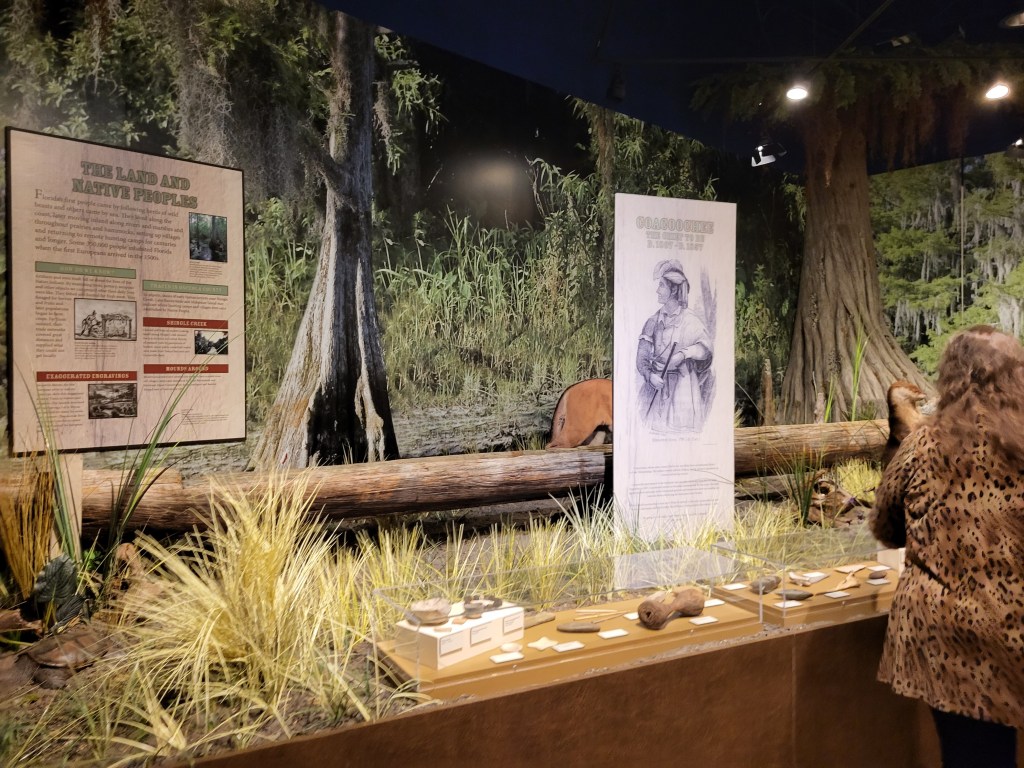
You’ll learn how Shingle Creek forms one of the primary headwaters of the Kissimmee River which flows to Lake Okeechobee to the south. Lake Okeechobee is the largest lake in Florida and the tenth largest lake in the U.S. It serves as the entry point to the Everglades. Osceola County, when it was originally formed in 1887, extended south from Kissimmee and Orlando all the way to the shore of Lake Okeechobee. I’ll say more about the County in the upcoming post on human history.
A Cypress Swamp, as represented in our museum, is home to a wide variety of species, including the alligator, river otter, wild boar, raccoon, Florida panther, cottonmouth, box turtle, pig frog, various wildflowers, and of course, the cypress tree. Cypress knees rise up out of the water to provide oxygen to the roots and trunk of the tree. Florida used to have more swamp land than it does now, but I’ll tell that story when I write about the human history.
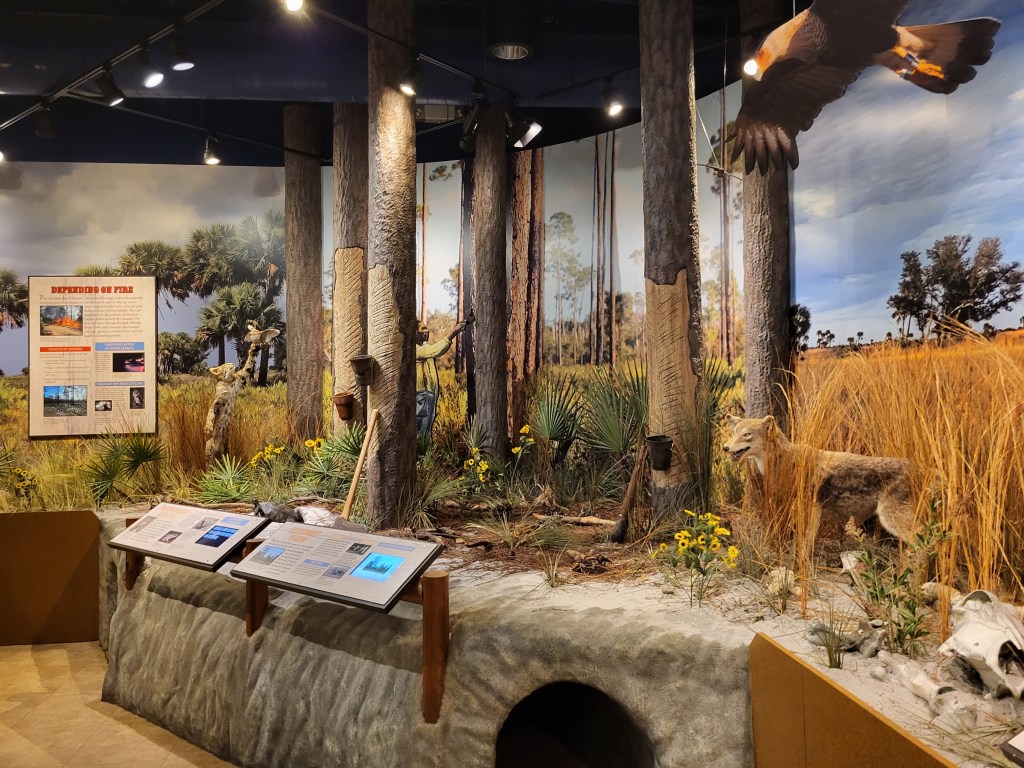
The next ecosystem that you’ll encounter is the pine and scrub flatwoods. Represented by both forest and prairie lands, the longleaf and slash pine are the predominant tree, and the undergrowth is largely the saw palmetto. Birds of prey frequent here, as well as the panther, the gopher tortoise (which is the only land tortoise in Florida), bobcat, quail, coyote, several venomous and non-venomous snakes, and various grasses and flowering plants.
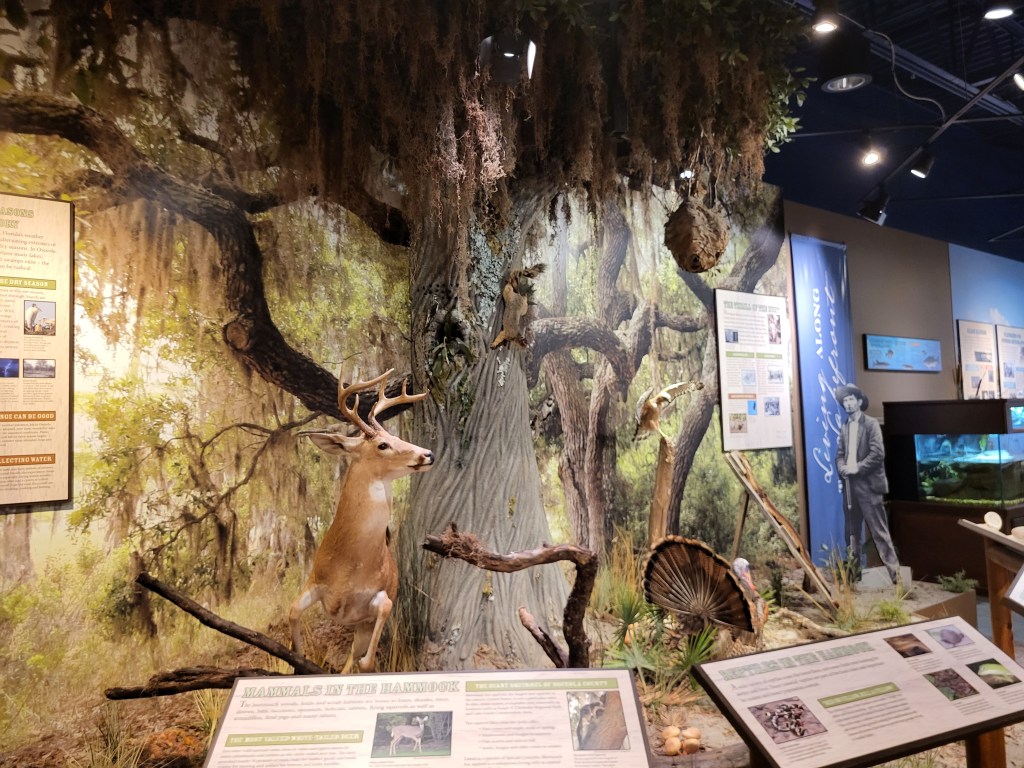
The Oak Hammock diorama shows a deer, turkey, red-shouldered hawk and Sherman’s Fox Squirrel, which is one of the largest North American squirrels. You’ll also see a corn snake and a coral snake. Don’t mix those two up! The large oak tree fills the scene and the word hammock refers to an elevated portion of land often surround be wetter regions, which serves and a sort of island that is never or rarely flooded.
The final ecosystem that we display is the lakes scene. Central Florida has numerous freshwater lakes that have attracted wildlife and tourists for centuries. The scene showcases several waterfowl including a canvasback duck, herring gull, smooth-billed ani, cormorant, and a bald eagle (I know – not technically a waterfowl). You’ll also see a soft-shelled turtle and an island snail.
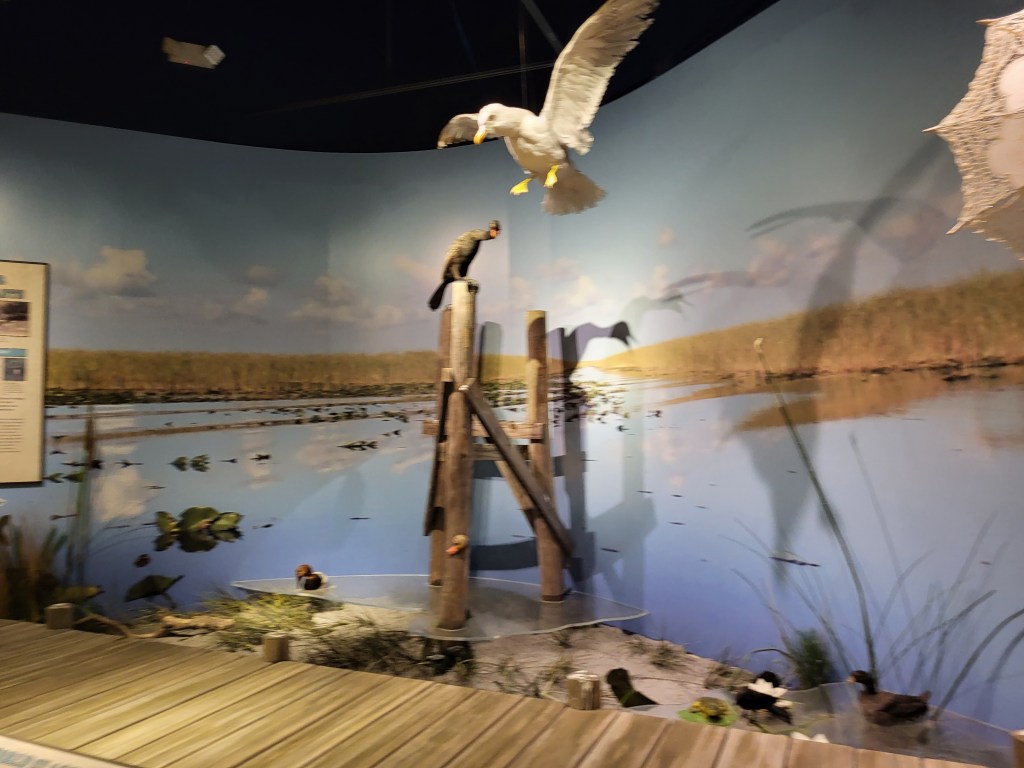
The informational panels scattered among these dioramas give you a lot more information about the unique characteristics of the plants and animals and suggest places in Florida where you can visit to see them in their natural surroundings.
The next post (after the next Life of Paul post) will review the history story that our museum has to tell.
 The Watchmaker's Pulse
One thought on “Nature Center”