In my last post on the Life of Paul, we learned that Paul was instrumental in the initial spread of the gospel beyond Jerusalem in a somewhat indirect way. The persecution of the church, in which he was a key instrument and driver, caused many of the new believers in Jesus to flee Jerusalem. As they fled into Judea, Samaria, and beyond, Saul sought ways to track them down, chase and confront them, and bring them back to Jerusalem to face “justice.” This is where Acts 9:1-2 picks up the story.
“But Saul, still breathing threats and murder against the disciples of the Lord, went to the high priest and asked him for letters to the synagogues at Damascus, so that if he found any belonging to the Way, men or women, he might bring them bound to Jerusalem.“
Damascus came under Roman control in 64 B.C. and thus, as a part of the Roman world, the Jews began to migrate there and establish synagogues. When the church fled Jerusalem, Paul must have surmised that some of the followers of Jesus would have traveled to Damascus. Since it sat as a major trade and transportation center sited on both of the major international highways of the day, it would be a good place for the gospel to spread from, and thus a good target for persecution of the church.
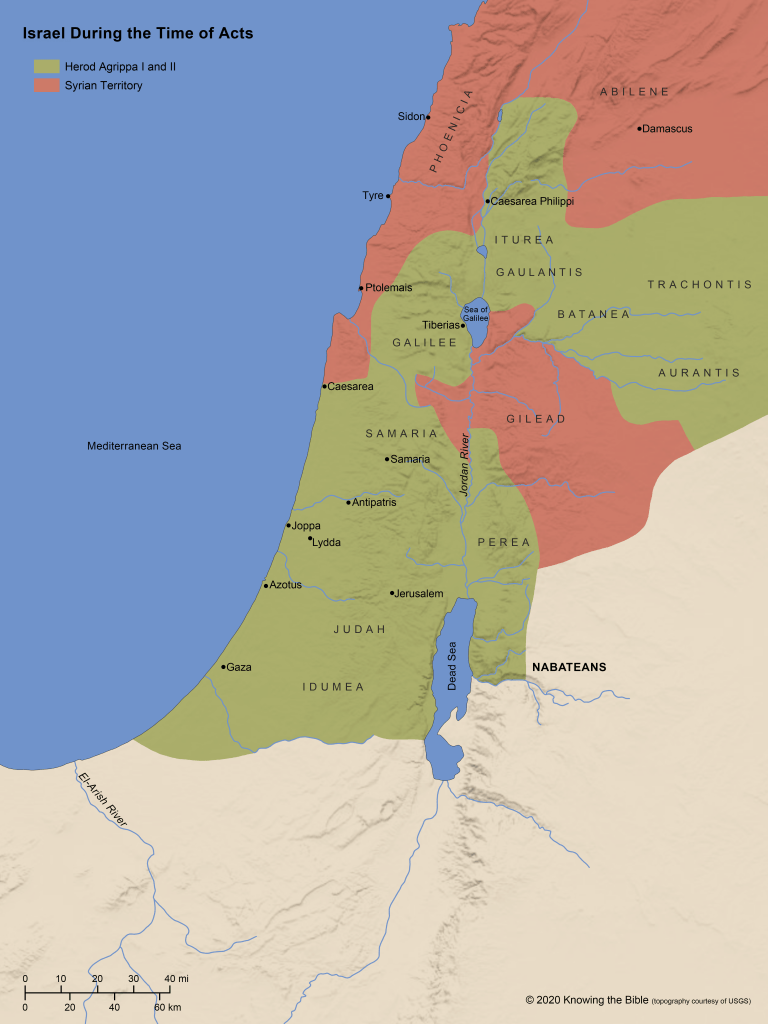
The road to Damascus from Jerusalem was about 140 miles. Traveling at an average of about 2 miles per hour for 10 to 12 hours per day, this would make it an 8 day journey, assuming they don’t travel on the sabbath. If Paul’s cohort traveled on horseback, they could have trimmed off a day or two from the journey. The reference map below is from Bible Maps and shows the regions under the control of the Herods and the Syrians during Paul’s time.
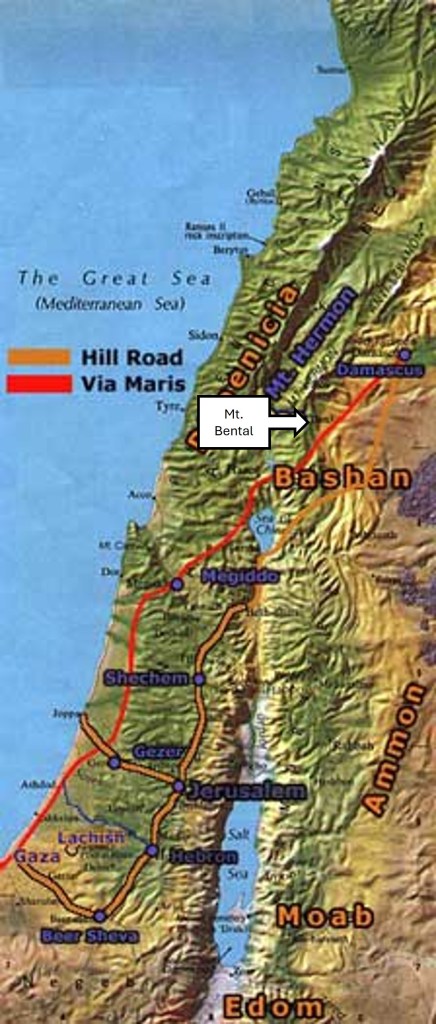
The map below is from the Jewish Virtual Library and shows the Via Maris (red) and the Hill Road (orange). Paul’s group likely took one of those routes and either one leads to Damascus. I’ve added a label to the map showing the approximate location of Mount Bental.
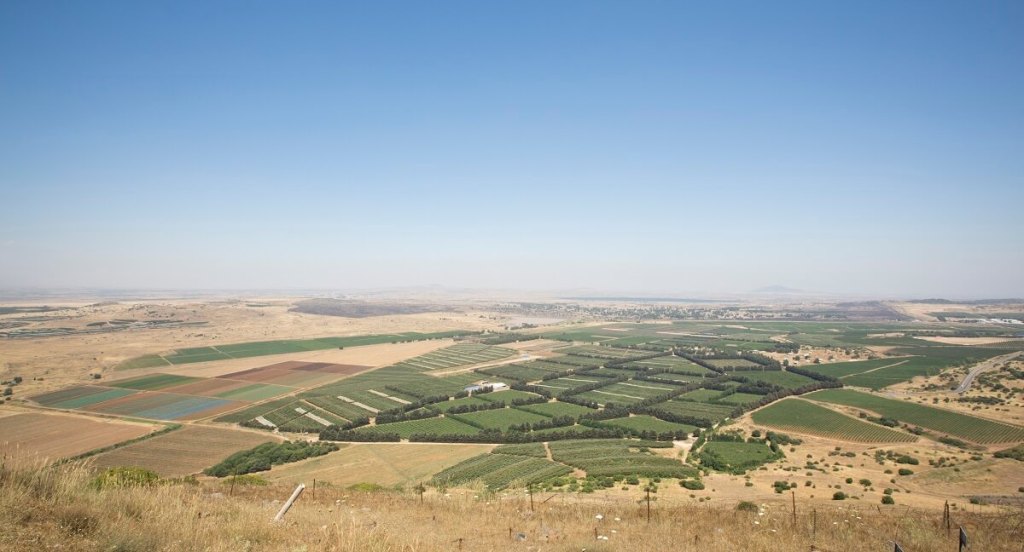
Today, Mount Bental is an extinct volcano located near the border of Syria in the Golan heights. The photo below, taken from the top of Mount Bental, is from BeinHarim tours. Damascus lies about 35 miles from this viewpoint across the plain. It is likely that the scene described in Acts 9:3-9 occurred in the plain visible from the mountain top and seen in the distance in the photo.
“Now as he went on his way, he approached Damascus, and suddenly a light from heaven shone around him. And falling to the ground, he heard a voice saying to him, ‘Saul, Saul, why are you persecuting me?’ And he said, ‘Who are you, Lord?’ And he said, ‘I am Jesus, whom you are persecuting. But rise and enter the city, and you will be told what you are to do.’ The men who were traveling with him stood speechless, hearing the voice but seeing no one. Saul rose from the ground, and although his eyes were opened, he saw nothing. So they led him by the hand and brought him into Damascus. And for three days he was without sight, and neither ate nor drank.“
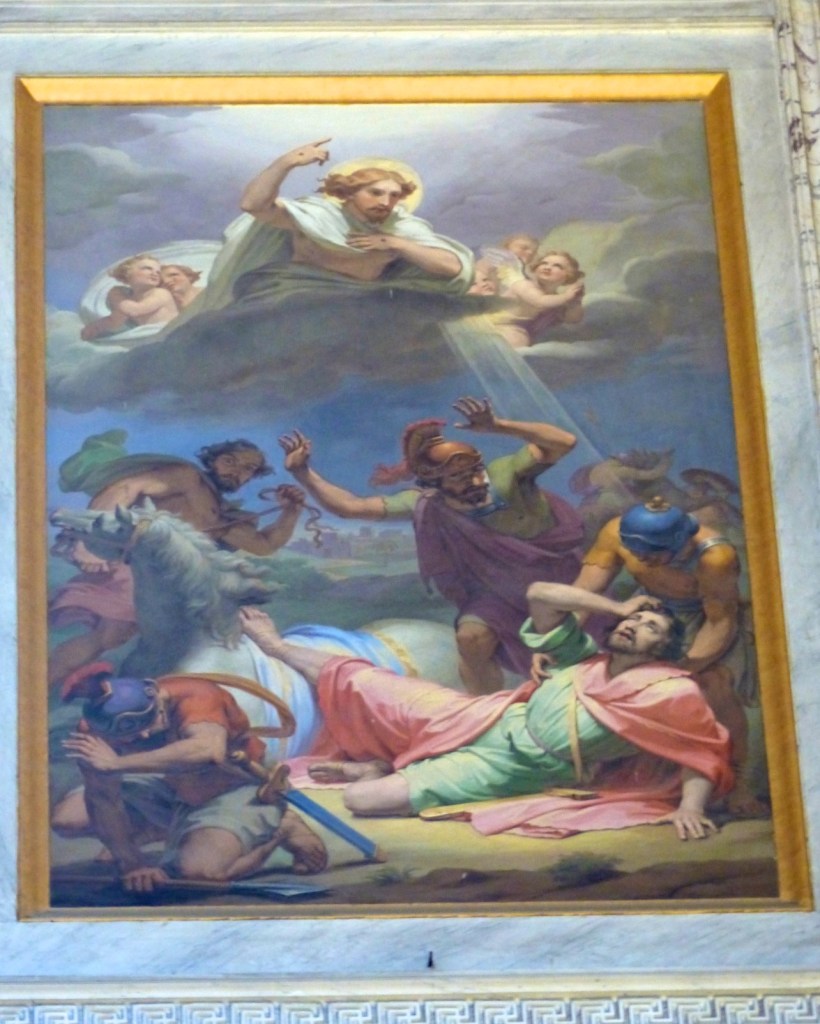
The second fresco painting from the Papal Basilica of Saint Paul Outside the Walls (and photographed by the Hermit’s Door) depicts Paul’s encounter with Jesus on the road to Damascus.
Later in Acts (22:6-11), Paul is quoted telling the story: “As I was on my way and drew near to Damascus, about noon a great light from heaven suddenly shone around me. And I fell to the ground and heard a voice saying to me, ‘Saul, Saul, why are you persecuting me?’ And I answered, ‘Who are you, Lord?’ And he said to me, ‘I am Jesus of Nazareth, whom you are persecuting.’ Now those who were with me saw the light but did not understand the voice of the one who was speaking to me. And I said, ‘What shall I do, Lord?’ And the Lord said to me, ‘Rise, and go into Damascus, and there you will be told all that is appointed for you to do.’ And since I could not see because of the brightness of that light, I was led by the hand by those who were with me, and came into Damascus.“
A few chapters later (Acts 26:12-18) he tells his story again, adding some further detail: “In this connection I journeyed to Damascus with the authority and commission of the chief priests. At midday, O king, I saw on the way a light from heaven, brighter than the sun, that shone around me and those who journeyed with me. And when we had all fallen to the ground, I heard a voice saying to me in the Hebrew language, ‘Saul, Saul, why are you persecuting me? It is hard for you to kick against the goads.’ And I said, ‘Who are you, Lord?’ And the Lord said, ‘I am Jesus whom you are persecuting. But rise and stand upon your feet, for I have appeared to you for this purpose, to appoint you as a servant and witness to the things in which you have seen me and to those in which I will appear to you, delivering you from your people and from the Gentiles—to whom I am sending you to open their eyes, so that they may turn from darkness to light and from the power of Satan to God, that they may receive forgiveness of sins and a place among those who are sanctified by faith in me.’“
The statement Jesus made – It is hard for you to kick against the goads – sheds a little light for us, and for Paul. A goad is a tool used by teamsters or animal handlers to direct the movements of the animal. Also known as a cattle prod, it was wielded as an animal is yoked as a beast of burden. The prod would be used to poke the animal to make it turn, or slow down, speed up, etc. Spurs do the same thing for a horse rider. The animal may obey the prodding and not suffer any injury. However, if the animal “kicks” back or resists, injury can happen.
It had always been Paul’s desire to serve and obey God. However, in his zeal, he did not recognize Jesus as Messiah. He thought that in punishing the church, he was punishing the enemies of God. But God had plans to use Paul from the day he was born. But Paul, albeit through ignorance, was “kicking against the goads” that God had provided. But God wasn’t going to give up on him. He got his attention there in that plain between Mt. Bental and Damascus. And we’ll continue the story in the next Life of Paul post.
 The Watchmaker's Pulse
One thought on “Life of Paul 6”